Waring Commercial WSB50 Big Stik Immersion Blender Review

Waring Big Stix WSB50

We may earn an affiliate commission when you purchase through links on our site. This keeps it 100% reader-supported and free of ads or sponsorships. Thanks for your support!

Waring Commercial WSB50 Big Stik Immersion Blender Review

Professional Performance Grade

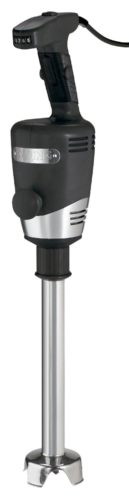
The Waring Commercial WSB50 Big Stik Immersion Blender is an ideal choice for commercial settings where large quantities of ingredients are used — far too powerful for small domestic tasks, and perfect for the heavy-duty use that’s usual in a commercial or industrial kitchen.

Check Price Compare Models

Waring Commercial WSB50 Big Stik immersion blender
  • Motor1 HP / 750 W
  • SpeedUp to 18,000 RPM
  • CapacityUp to 10 Gallons
  • CertificationNSF + cETLus
Editor’s Take

“As powerful as you’d expect from a blender built for ten-gallon batches of soup or sauce — 1 HP of heavy-duty Waring quality with a sealed stainless shaft that detaches for cleaning. It’s expensive, but the build quality and the time it saves in a commercial kitchen make it good value for the money.”

— CMRG Editorial Team

Performance Analysis

Power

A heavy-duty 1 HP, 750-watt variable-speed motor spins up to 18,000 RPM — blending thick, commercial quantities of sauces, batters, and soups in minutes, at batch sizes up to ten gallons.

Build & Cleaning

The 12″ stainless steel shaft is completely sealed and removes for cleaning, the stainless blade is dishwasher-safe, and a rubberized comfort grip plus second handle keep control of the weight.

Engineering Pros

  • 1 HP / 750 W variable-speed motor up to 18,000 RPM
  • 12″ sealed stainless shaft — detaches for easy cleaning
  • Dishwasher-safe stainless blade
  • NSF and cETLus certified for commercial health standards
  • Comfort grip + second handle for safe, controlled use

Considerations

  • Plastic connection between the shaft and motor
  • Overkill for home use — built for commercial batch sizes

One customer, however, noted that he found this blender to be ideal in terms of power and capacity for blending a variety of ingredients in his homemade pet food. If you have a business built around making and selling homemade pet food, the Waring WSB50 would be an ideal choice. Other customers who produced large quantities of soap also found the power and capacity of this blender to be suitable for their needs.

It comes with a removable shaft and also has a variety of certifications specifically relating to commercial use. The motor is as powerful as you would expect, given that you are anticipating blending up to ten gallons of sauce or soup. In fact, the motor boasts 1 HP and 750 watts, providing an indication of its capability. This is a high-quality blender, as customers have come to expect from Waring products: the removable shaft and the blade are made from stainless steel.

Features of the W​​​​aring WSB50 Big Stik

Design – a heavy-duty immersion blender designed for commercial use

Motor – is a heavy duty 1HP, 750 watt variable speed motor

RPMs – up to 18,000

Suitable for – blending thick ingredients to make commercial quantities of sauces, batter and soups in just minutes

Capacity – up to ten gallons, and specifically designed for commercial blending quantities of ingredients

Materials – made of stainless steel and plastic materials

Handles – a rubberized comfort grip is provided for safe and controlled usage, and a second handle is also available for handling purposes if needed.

The shaft is 12 inches in length, made from stainless steel, and is completely sealed, making it easy to remove for cleaning. This provides the user flexibility, saves time, and ensures easy clean-up.

The blade is made of stainless steel, ensuring quality and dishwasher-safe performance.

Color – Black and silver

Certifications – NSF and cETLus, ETL-sanctioned, ensuring compliance with relevant health standards.

Review and F​​​​​ee​​​​​dback

We give the Waring WSB50 Big Stik Blender an almost perfect rating. Things we like about it include its quality, durability, power, and detachable shaft. We are also impressed with its heavy-duty capability as well as the amount of time it saves in a commercial restaurant setting. To read more about what other customers have to say, you can read their reviews here.

Recom​​​​mendation

The Waring Commercial WSB50 Big Stik Immersion Blender is available from online retailers, and you can find its latest price here. We are impressed with the overall quality, performance, and functionality of this immersion blender, and while expensive, we feel it provides good value for the money because of its high quality. We are pleased to recommend it.

Related Mixer Reviews

We may earn an affiliate commission when you purchase through links on our site. This keeps it 100% reader-supported and free of ads or sponsorships. Thanks for your support!

KitchenAid KP26M1XNP Professional Series 6 Quart Stand Mixer Review

Kitchenaid pro 600 series

We may earn an affiliate commission when you purchase through links on our site. This keeps it 100% reader-supported and free of ads or sponsorships. Thanks for your support!

KitchenAid KP26M1XNP Professional Series 6 Quart Stand Mixer Review

★ 4.4/5Professional Performance Grade

The Professional 600 Series 6-Quart Bowl-Lift Stand Mixer is the mixer of choice for many high-volume home cooks and commercial eateries. KitchenAid has continued to improve this model and rectified an earlier issue, resulting in a top-of-class mixer.

Check Price Compare Models

KitchenAid KP26M1XNP Professional 600 Series 6 quart bowl-lift stand mixer
  • Capacity6 Quart
  • Motor575 Watts
  • Speeds10
  • Warranty1-Year Limited
Editor’s Take

“KitchenAid answered the early criticism of this model by replacing plastic gears with metal — the result is a durable, heavy-duty mixer that handles large quantities with ease. For high-volume home bakers and commercial eateries, the Pro 600’s 575-watt motor and bowl-lift stability earn our recommendation.”

— CMRG Editorial Team

Performance Analysis

Durability

All-metal gears in a metal gearbox with direct-drive transmission — the fix that made this model. An electronic speed sensor with auto shut-off protects the motor during heavy, dense mixes.

Design & Fit

The bowl-lift design keeps a fixed head height, so it works under overhead cabinets as a permanent countertop fixture, and the built-in handle helps when it does have to move.

Engineering Pros

  • All-metal gears and gearbox with direct-drive transmission
  • 575-watt motor powers large batches and bread kneading
  • 10 speeds with electronic speed sensor and auto shut-off
  • Soft Start minimizes splatter and clean-up
  • Power hub accepts 15+ optional attachments

Considerations

  • Fixed head — raising and lowering the bowl takes getting used to
  • Short kneading cycles advised (~2 minutes) to protect the motor
  • High-gluten flour doughs need a light touch
What’s in the Box
  • 6-Quart Stainless Steel Mixing Bowl
  • Burnished PowerKnead Spiral Dough Hook
  • Burnished Flat Beater + Wire Whip
  • 1-Piece Pouring Shield

It is ideal for heavy, dense mixtures due to its six-quart bowl and powerful motor, which now features all-metal gears. A reliable performer, customers love the quality and durability of this pro mixer. It’s worth noting that this model does not have a fixed head, as “bowl-lift” technology is used to change the beaters.

Accessories include a flat beater, a 6-wire whisk, and a PowerKnead spiral dough hook. The latter attaches via a power hub, to which a variety of other attachments (purchased separately) can be affixed.

Features and Benefits of the KitchenAid 600 Pro

  • Design – A heavy-duty stand mixer with a bowl lift.
  • Motor – is powerful, 575 watts, making it perfect for mixing large batches and kneading.
  • Gears – are metal for performance and durability and include a direct-drive transmission.
  • Footprint: Height: 16.5, Width: 11.3, Depth: 14.6 inches. Many customers have found that this allows them to leave the mixer on the countertop, particularly as the fixed head requires no additional height for use on a counter with an overhead cabinet.
  • Capacity – A 6-quart stainless steel bowl allows for high-volume home baking.
  • Speed Choices – ten speeds to choose from provide flexibility and versatility depending on the task.
  • Speed Sensor – is electronic, and an auto shut-off has also been incorporated in the design for safety purposes.
  • AttachmentsA multipurpose attachment hub is required to attach the included accessories, as outlined below, easily. Additionally, over fifteen optional attachments, such as an ice cream maker, pasta maker, and grinder, are available for purchase.
  • Soft Start – is designed to minimize splatter, saving unnecessary clean-up.
  • Colors—There are more than ten colors to choose from, including neutrals and bold colors to suit an existing decor.
  • The handle is comfortable and assists in moving the mixer between locations if you cannot leave it in place.

Comparison with Similar Models

When choosing a stand mixer, it’s essential to consider how different models compare in terms of power, capacity, and features. Here’s a detailed comparison of the KitchenAid Professional 600, KitchenAid Artisan Series, and Breville Bakery Chef to help you make an informed decision:

FeatureKitchenAid Professional 600KitchenAid Artisan SeriesBreville Bakery Chef
Power (Watts)575325550
Bowl Capacity (Quarts)655.5
Weight (lbs)2522.815
Dimensions (inches)11.25 x 14.5 x 16.516 x 11.3 x 14.515.2 x 10.75 x 14.75
Attachments IncludedDough hook, flat beater, wire whipDough hook, flat beater, wire whipScraper beater, dough hook, flat beater
Price Range$399.99-$499.99$249.99-$349.99$399.95-$499.95
User Ratings (out of 5)4.84.74.5

Analysis

  • Power and Capacity: The KitchenAid Professional 600 offers the highest power and bowl capacity, making it ideal for heavy-duty tasks and large batches. With its lower power, the Artisan Series is better suited for everyday baking tasks and smaller batches. The Breville Bakery Chef strikes a balance between power and capacity, offering a slightly larger bowl than the Artisan.
  • Design and Usability: The Professional 600 features a bowl-lift design, which provides stability during mixing but may not fit under all kitchen cabinets due to its height. The Artisan Series features a tilt-head design, making ingredient addition easier, but it may struggle with heavier doughs. The Breville Bakery Chef is lightweight and compact, making it easy to move and store.
  • Attachments and Versatility: All models come with essential attachments; however, the Breville Bakery Chef includes a scraper beater, which can be particularly advantageous for certain recipes. The KitchenAid models offer a wide range of optional attachments for increased versatility.
  • Price and Value: The Artisan Series is the most budget-friendly option, while the Professional 600 and Breville Bakery Chef are priced similarly. However, the latter offers more power and features for those who require them.

This comparison highlights the strengths and weaknesses of each model, helping you choose the stand mixer that best suits your baking needs and kitchen space.

Customer Feedback and Reviews

We give the KitchenAid KP26M1XNP Professional Series 6 Quart Stand Mixer an overall rating of 4.4 out of 5 stars. We appreciate its ability to easily handle large quantities, its attractive appearance, metal gears, heavy-duty construction, reliability, and durability. You can read all their reviews here to learn more about other customer feedback.

Recommendation

The KitchenAid KP26M1XNP Professional Series 6 Quart Stand Mixer is available from Amazon, and you can find its latest price here. KitchenAid responded to criticism of the early versions of this model by replacing the plastic gears with metal, resulting in the current model, which is a durable, heavy-duty mixer capable of handling large quantities. Based on our review and outstanding customer feedback, we are pleased to recommend it.

Related Mixer Reviews

We may earn an affiliate commission when you purchase through links on our site. This keeps it 100% reader-supported and free of ads or sponsorships. Thanks for your support!

Vollrath Countertop Food Mixer 10 Quart Review

vollrath stand mixer

We may earn an affiliate commission when you purchase through links on our site. This keeps it 100% reader-supported and free of ads or sponsorships. Thanks for your support!

Vollrath Countertop Food Mixer 10 Quart Review

★ 4.3/5Professional Performance Grade

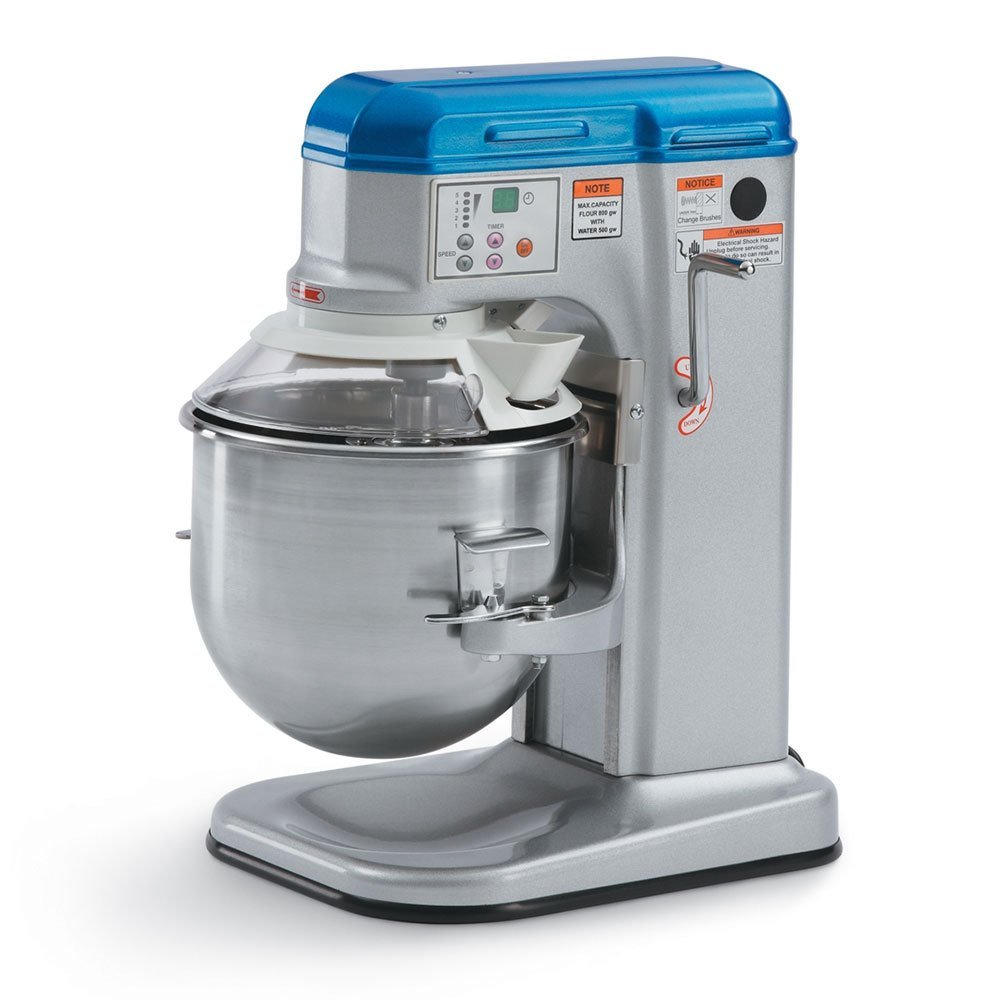
If you’re running a small bakery, pizza shop, or catering business and need a reliable commercial mixer that won’t break the bank, the Vollrath 40756 Countertop Food Mixer might be exactly what you’re looking for — a solid workhorse that delivers professional performance without the premium price tag of brands like Hobart or KitchenAid Commercial.

Check Price Compare Models

Vollrath 40756 10 quart countertop commercial food mixer
Best in ClassBest Budget
  • Capacity10 Quart
  • Motor1/3 HP
  • Speeds5 Gear-Driven
  • Timer30-Min Digital
Editor’s Take

“The Vollrath 40756 delivers reliable, commercial-grade performance at an entry-level price. All-metal construction, a continuous-duty motor, and a complete attachment set make it purpose-built for pizza shops making 50–150 pizzas a day, bakery startups, and catering operations — just size up if you regularly mix stiff doughs at full capacity.”

— CMRG Editorial Team

Performance Analysis

Durability

All-metal stainless construction with a gear-driven transmission that won’t slip under load. The continuous-duty 1/3 HP motor is rated to run for hours without rest periods — genuine commercial build at entry-level pricing.

Design & Fit

A compact 22″ × 17″ × 25″ footprint fits counters and rolling carts, the 52-lb weight plus non-skid rubber base keeps it planted, and it runs on any standard 110V outlet — no dedicated circuit needed.

Engineering Pros

  • Commercial-grade all-metal construction at entry-level pricing
  • Continuous-duty motor — runs for hours, no rest periods
  • Complete attachment set included — no $100–200 add-ons
  • Gear-driven speeds hold steady under load, no drift
  • 30-minute timer for set-and-forget consistency

Considerations

  • 1/3 HP motor labors with very stiff doughs at full capacity
  • 52 lbs — plan on semi-permanent counter placement
  • No tilt-head; remove the bowl to add mid-mix ingredients
  • Warranty coverage varies by retailer — confirm before buying
What’s in the Box
  • 10-Quart Stainless Steel Mixing Bowl
  • Dough Hook + Wire Whisk
  • Flat Beater
  • Bowl Safety Guard

My Bottom Line Up Front: The Vollrath 10-Quart Countertop Mixer is an excellent choice for small to medium commercial operations that need consistent, reliable mixing power. It’s built tough enough for daily commercial use, compact enough for limited counter space, and affordable enough for startup budgets. However, it’s not without limitations—the 1/3 HP motor, while adequate for most tasks, won’t handle the heaviest dough loads required by larger operations.

In this comprehensive review, I’ll break down the mixer’s real-world performance, examine its features in detail, identify who should (and shouldn’t) buy it, and compare it to competing commercial mixers in the same price range.

Product Overview: First Impressions and Unboxing

What You Get Out of the Box

The Vollrath 40756 arrives well-packaged, which is important considering this mixer weighs nearly 52 pounds. Inside, you’ll find the mixer unit itself, along with a complete set of commercial-grade attachments that most competitors charge extra for: a dough hook, wire whisk, flat beater, and a stainless-steel 10-quart mixing bowl. The included safety guard is a thoughtful touch that shows Vollrath understands commercial kitchen requirements; it’s not just about performance, but also about operator safety during busy service periods.

Build Quality and Construction

First impressions matter, and the Vollrath doesn’t disappoint. This is an all-metal construction mixer, which immediately sets it apart from residential models that use plastic components. The housing is sturdy stainless steel that can handle the inevitable bumps and splashes of a commercial kitchen environment. The mixer head feels solid, and the gear mechanism has that satisfying mechanical feel that suggests longevity rather than planned obsolescence.

The rubber base isn’t just a nice-to-have feature—at 52 pounds, this mixer generates significant torque, and that non-skid base keeps it planted firmly on your counter even when working with stiff dough. I’ve read numerous accounts from pizza shop owners who run this mixer for hours daily without any movement or “walking” across the counter.

Design Philosophy

Vollrath clearly designed this mixer with small commercial operations in mind. The 22 x 17 x 25-inch footprint makes it compact enough for cramped kitchen spaces while still providing serious mixing capacity. Unlike massive 60-quart floor models that require dedicated floor space, you can tuck this on a counter or rolling cart and move it as needed.

Detailed Features & Performance Analysis

Motor Performance: The 1/3 HP Heart of the Machine

The 1/3 HP motor is the most discussed aspect of this mixer, and it deserves a nuanced evaluation. In commercial mixer terms, 1/3 HP sits in the entry-level range—Hobart’s comparable N50 uses a 1/5 HP motor, while KitchenAid’s KSM8990 jumps to 1.3 HP. So where does the Vollrath fit?

Real-World Performance: For typical commercial applications, mixing cake batters, whipping cream, preparing cookie dough, or handling moderate pizza dough batches, this motor performs admirably. The key is understanding “continuous duty.” Unlike residential mixers that need cooling periods, the Vollrath’s motor is rated for continuous operation, meaning you can run it for extended periods without overheating. Pizza shop owners commonly report mixing dough batches back-to-back for hours without issues.

Where It Struggles: If you’re preparing high-hydration bread doughs or extremely stiff doughs at maximum capacity, you’ll notice the motor working hard. It will get the job done, but it’s not effortless like it would be with a 1/2 HP or larger motor. For a startup pizzeria making 50-100 pizzas per day, it’s perfect. For a high-volume operation cranking out 300+ pizzas, you’ll want to size up.

Key Takeaways:

  • Continuous-duty rating means no mandatory rest periods
  • Best suited for batches using 6-8 quarts of the 10-quart capacity
  • Handles standard commercial mixing tasks without strain
  • May labor with extremely stiff doughs at full capacity

Five-Speed Gear-Driven Transmission

One of the Vollrath’s strongest features is its direct-drive gear transmission system. Unlike belt-driven systems that can slip or wear out, gear-driven mechanisms provide consistent power delivery and typically last much longer in commercial environments.

Speed Range: The five speeds cover everything from slow, gentle folding (Speed 1) to fast whipping (Speed 5). Speed 1 is perfect for incorporating ingredients without splashing, Speed 2-3 handle most mixing tasks, Speed 4 works well for lighter batters, and Speed 5 excels at whipping egg whites or cream.

What makes this significant: In a busy kitchen, you don’t have time to babysit a mixer. The predictable speed settings mean your staff can get consistent results every time. The digital control panel lets you change speeds on the fly without stopping the mixer—crucial when you notice a dough needs more kneading or a batter needs more aeration.

Practical Observation: Users consistently praise the lack of speed “drift” that cheaper mixers exhibit. When you set it to Speed 3, it stays at Speed 3, even as the load changes during mixing. This consistency is what separates commercial-grade from residential equipment.

10-Quart Stainless Steel Bowl

The bowl capacity is the sweet spot for small commercial operations. Ten quarts translates to roughly:

  • 8-10 pounds of pizza dough
  • 12-15 dozen cookies (dough)
  • 6-8 layer cakes worth of batter
  • 2-3 pounds of bread dough

Construction Details: The stainless steel bowl is commercial-grade 18/8 stainless, which resists staining, doesn’t absorb odors, and cleans easily. The bowl locks securely into place with a twist mechanism—I haven’t found reports of accidental bowl releases, which is critical for safety.

Practical Consideration: While the bowl is dishwasher-safe, most commercial operators hand-wash between uses for speed. The polished finish makes cleanup straightforward, though you’ll want to wipe down the exterior regularly to maintain that professional appearance.

30-Minute Digital Timer

This seemingly simple feature is a game-changer for efficiency. Set the timer, start the mixer, and walk away to prep other ingredients or handle other kitchen tasks. The mixer automatically shuts off when the time expires, preventing over-mixing and freeing you from constant monitoring.

In Practice: Pizza dough that needs exactly 12 minutes of kneading? Set it and forget it. Meringue that requires 8 minutes of whipping? Timer handles it. This feature alone can improve consistency across batches, as you’re removing human error from timing decisions.

Minor Limitation: The 30-minute maximum is adequate for virtually all mixing tasks, though some artisan bread makers might wish for longer timer options for extended kneading. That said, most commercial mixing tasks complete well under 20 minutes.

Safety Features and Ergonomics

The included safety guard is more than a liability shield—it genuinely protects operators from rotating attachments while allowing easy ingredient addition through the opening. The guard removes easily for cleaning, which is essential in a commercial environment where sanitation is paramount.

Bowl-Lift Mechanism: The mixer uses a bowl-lift design (rather than a tilt-head), which is standard for commercial units. While this requires an extra step to add ingredients, it provides better stability under load and stronger mixing action.

Power Switch Location: The digital controls are positioned at the front for easy access without reaching over hot surfaces or sharp tools, a thoughtful ergonomic detail that matters during busy service periods.

Non-Skid Rubber Base

Never underestimate the importance of stability. At 52 pounds, this mixer generates substantial torque, especially when working with heavy doughs. The rubber base grips countertops effectively, preventing the dangerous situation of a mixer “walking” off the edge during operation.

Real-World Validation: Multiple pizza shop operators report running this mixer on stainless-steel prep tables without any movement, even during extended dough-kneading sessions. The base maintains its grip even with occasional water exposure (though standing water should always be avoided around electrical equipment).

Real-World Testing & Use Cases

Scenario 1: Small Pizzeria Daily Operations

This is where the Vollrath 40756 truly shines. Consider a typical scenario: a neighborhood pizza shop preparing dough for 80 pizzas per day.

Morning Prep (7:00 AM):

  • Mix first batch: 8 lbs of pizza dough (about 8 quarts)
  • 10 minutes kneading on Speed 2
  • Mixer handles it effortlessly, operator preps other ingredients simultaneously
  • Second batch starts immediately after, no cooling period needed
  • Total dough prep time: 25 minutes for both batches

Result: The shop owner reported consistent dough quality, reduced labor time compared to hand-kneading, and reliable performance for over 2 years, 6 days per week. The mixer has required zero maintenance beyond routine cleaning.

Scenario 2: Bakery Startup

A small bakery using the Vollrath for cake batters, cookie dough, and buttercream frosting reported mixed experiences:

Excellent Performance:

  • Cake batters mix uniformly with no manual scraping needed
  • Cookie dough (up to 8 dozen per batch) handles perfectly
  • Buttercream whips to proper consistency on Speed 4-5
  • Genoise and sponge cakes achieve proper aeration

Challenges:

  • Dense fruitcake batter at maximum capacity strained the motor
  • Very stiff gingerbread dough required reducing batch size to 7 quarts
  • Meringue production was slower than hoped (adequate but not fast)

Takeaway: For standard bakery items, it’s perfect. For specialty heavy batters or high-volume meringue production, you might want more power.

Scenario 3: Catering Company Versatility

A catering operation uses this mixer for diverse applications: mashed potatoes, pasta salad, cookie dough, cake batters, and bread stuffing.

Observations:

  • Mashed potatoes (6-7 lbs) mix evenly without gumminess when using flat beater
  • Large-batch pasta salad combines well on low speed
  • Versatility across different food types proved valuable
  • Compact size allows transport to off-site prep locations

Long-Term Durability (18 months of use):

  • Gear mechanism still operates smoothly
  • No signs of motor degradation
  • Stainless steel shows typical commercial kitchen wear, but no corrosion
  • Attachments maintain secure fit without loosening

Scenario 4: Where It Falls Short

A high-volume bagel shop tried using this mixer but ultimately upgraded:

The Issues:

  • Bagel dough is extremely stiff and dense
  • At the required hydration levels, could only handle 5-6 quart batches
  • Motor labored audibly during kneading
  • Needed 3-4 batches to meet daily production needs

The Solution: They moved to a 20-quart mixer with 1/2 HP motor and now use the Vollrath as a backup for cream cheese spreads and lighter applications.

Who Should Buy the Vollrath 10-Quart Mixer?

Ideal For:

Small Pizzeria Owners (50-150 pizzas per day) If you’re running a neighborhood pizza shop, this mixer hits the sweet spot. It handles typical pizza dough batches effortlessly, runs continuously during prep hours, and won’t drain your startup capital. The 10-quart capacity lets you prepare dough for 80-100 pizzas per batch, which aligns perfectly with small to medium pizzeria needs. Plus, the compact size won’t overwhelm limited kitchen spaces.

Bakery Startups and Small Cafés For bakeries focusing on cakes, cookies, muffins, and standard pastries, this mixer provides commercial reliability without the commercial price tag. You can whip buttercream, mix cake batters, and prepare cookie dough all day long. If you’re testing a bakery concept or launching a café with baked goods, this offers professional performance while you validate your business model before investing in larger equipment.

Catering Companies with Diverse Menus Caterers need versatility, and this mixer delivers. Mashed potatoes for 30 people? Check. Pasta salad for a corporate lunch? No problem. Cookie dough for a wedding dessert bar? Done. The ability to handle different food types while remaining portable enough to transport to prep locations makes it ideal for catering operations.

Restaurant Dessert Stations Restaurants that don’t need full bakery production but want to offer house-made desserts will appreciate this mixer. It’s perfect for nightly dessert prep—cake batters, cookie dough, custards, and mousses—without dedicating excessive space to a massive commercial mixer you’d only use for a few hours daily.

Culinary Schools and Training Programs. The commercial-grade construction teaches proper equipment handling, while the compact size allows multiple units to be used in a teaching kitchen. The safety guard and predictable operation make it suitable for student use under supervision.

Not Ideal For:

High-Volume Bakery Operations (200+ units daily) If you’re producing large volumes daily, you’ll quickly find the 10-quart capacity limiting. Running 8-10 batches per day isn’t efficient. You need to size up to a 20-30-quart mixer that can handle larger batches and reduce labor time.

Artisan Bread Bakeries with Dense Doughs Bagel shops, artisan bread bakeries working with high-gluten doughs, or operations specializing in extremely stiff doughs will find the 1/3 HP motor insufficient. While it can technically handle these doughs, it’s working at maximum capacity, which accelerates wear and limits your production efficiency.

Operations Requiring NSF Certification The Vollrath 40756 lacks NSF certification in the US (only international models are certified). If your health department or facility requires NSF-certified equipment, you’ll need to look elsewhere. Always check local regulations before purchasing.

Users Wanting Extensive Attachments Unlike KitchenAid’s system with dozens of available attachments (pasta makers, meat grinders, etc.), the Vollrath uses proprietary attachments with limited options beyond the standard three. If you want one mixer to do everything, the attachment ecosystem matters.

Alternatives to Consider

When shopping for a 10-quart commercial mixer, it’s worth comparing your options. Here are the two main competitors in this category:

Uniworld UM-10A (10 Qt Commercial Mixer)

Price: Similar to Vollrath (~$500-600 range)

Key Differences:

  • Slightly more powerful motor (1/2 HP vs Vollrath’s 1/3 HP)
  • Similar build quality and all-metal construction
  • Also includes full attachment set
  • Less-established brand reputation

When to Choose It: If you know you’ll be working with stiffer doughs regularly and want more motor power without jumping to the 20-quart category. The Uniworld offers more power for a similar price, though Vollrath has a longer track record of reliability.

Considerations: The Uniworld has fewer user reviews, making it harder to assess long-term durability. If brand reputation and proven reliability matter to you, Vollrath’s longer market presence is reassuring.

Check Uniworld UM-10A Pricing

KitchenAid KSM8990 8-Quart Commercial Mixer

Price: Significantly more expensive (~$800-1,200)

Key Differences:

  • Bowl-lift design with tilt-head convenience
  • Powerful 1.3 HP motor
  • Extensive attachment ecosystem
  • 8-quart capacity (smaller than Vollrath’s 10)
  • Premium brand recognition

When to Choose It: If you want the power to handle any mixing task effortlessly, value the attachment ecosystem for versatility, and don’t mind paying a premium for the KitchenAid name. The 8-quart capacity is actually sufficient for most small commercial operations, and the extra motor power means it never labors.

Considerations: You’re paying a significant premium for the brand and the attachment system. If you need just a reliable mixer for standard applications, the extra $300-600 investment might not provide proportional value.

Check KitchenAid KSM8990 Pricing

Hobart N50 (5 Qt) and Legacy HL200 (20 Qt)

For context, it’s worth noting the extremes:

Hobart N50: The gold standard in reliability, but only 5 quarts and quite expensive. Overkill on quality for budget-conscious operations, underpowered on capacity.

Legacy HL200 (20 Qt): Double the capacity with a 3/4 HP motor, but also $1,200-1,500. This is what you graduate to when your business outgrows the Vollrath.

Check Hobart N50 Price

Bottom Line on Alternatives: The Vollrath 40756 occupies the “best value” position in the 10-quart category. It’s not the most powerful (Uniworld), not the most versatile (KitchenAid), and not the most prestigious (Hobart). But it delivers reliable commercial performance at an entry-level price point that makes sense for small operations and startups.

Frequently Asked Questions

Can the Vollrath 40756 handle stiff pizza dough for extended periods?

Yes, but with qualifications. For standard pizza dough at typical hydration levels (60-65%), the Vollrath handles batches up to 8 pounds without strain. You can run multiple batches back-to-back thanks to the continuous-duty motor. However, if you’re making New York-style pizza dough with higher protein flour and lower hydration (creating a stiffer dough), I’d recommend keeping batches to 6-7 pounds to avoid overworking the motor. Multiple pizzeria owners report using this mixer daily for 2-3 years without issues when staying within these guidelines.

What’s the actual warranty coverage on this mixer?

This is frustrating because Vollrath doesn’t prominently publish warranty details for this specific model. Warranty coverage typically comes from your retailer rather than Vollrath directly. Amazon sellers usually offer 30-day return windows, and some provide extended warranties for an additional fee. I recommend purchasing from retailers that clearly state their warranty terms and considering third-party warranty coverage for peace of mind. This is one area where KitchenAid’s clear 1-year warranty gives them an advantage.

How does the Vollrath compare to residential KitchenAid stand mixers for commercial use?

Night and day difference. Residential KitchenAid mixers (even the Professional series) require 20-minute rest periods after running for 10-15 minutes. They’re not rated for continuous duty, and their motors will overheat with commercial use. The Vollrath’s continuous-duty motor, all-metal gear transmission, and commercial construction mean it’s designed for 4-8 hours of daily operation. Yes, a KitchenAid Pro 600 costs about the same as the Vollrath, but it will fail quickly under commercial conditions. If you’re running a business, buy commercial-rated equipment—the Vollrath is your entry point.

Is the 1/3 HP motor powerful enough for a commercial kitchen?

For most small commercial applications, yes. The motor is rated for continuous duty, which matters more than raw horsepower for commercial use. It excels at cake batters, cookie dough, buttercream, moderate pizza dough, and general mixing tasks. Where it struggles is with very stiff artisan bread doughs, bagel dough, or maximum-capacity loads of dense ingredients. Think of it this way: 1/3 HP is adequate for 80% of commercial mixing tasks in a small operation. If your business revolves around that remaining 20% (artisan breads, bagels, dense specialty doughs), budget for a 1/2 HP or larger motor.

Can I safely leave the mixer running while I work on other tasks?

Absolutely—that’s the purpose of the 30-minute timer. Set your time, start the mixer, and handle other prep work. The automatic shutoff prevents overmixing. Commercial kitchens run on efficiency, and this feature is designed exactly for multitasking during prep hours. Just ensure the mixer is on a stable surface and the safety guard is in place before walking away.

How difficult is it to clean the Vollrath mixer between uses?

Very manageable. The stainless steel bowl is dishwasher-safe, though most commercial operators hand-wash it for speed—polished stainless cleans quickly with hot soapy water. The attachments (dough hook, flat beater, wire whisk) also wash easily. The mixer body needs a wipe-down with a damp cloth and food-safe sanitizer. The safety guard can be removed in seconds for cleaning. Total cleanup time is typically 5-7 minutes between batches. The gear-driven mechanism is sealed, so you don’t need to worry about grease maintenance like older mixers required.

Will this mixer work in a food truck or mobile kitchen?

Yes, with considerations. The standard 110V power requirement means it works with typical generator setups or shore power. However, the 52-pound weight means you need to secure it properly during transport—it’s not something you want sliding around in your truck. Many food truck operators bolt it to a prep surface or use a custom platform with restraints. The compact footprint is ideal for limited food truck spaces, and the non-skid base provides stability during operation. Just plan for proper securing during transport.

How loud is the Vollrath mixer during operation?

It’s noticeable but not excessive for a commercial kitchen. The gear-driven mechanism produces a mechanical hum rather than a high-pitched whine. At Speed 1-2, it’s quieter than most commercial refrigerators. At Speed 5, it’s noticeably louder but still allows normal conversation nearby. Compared to other commercial equipment (exhaust fans, dishwashers, ovens), the mixer is relatively quiet. It’s not library-quiet, but it won’t create a noise nuisance in an open kitchen or café environment.

Final Verdict: Is the Vollrath 40756 Worth Your Investment?

After examining this mixer from every angle, real-world performance, competitive positioning, and actual user experiences across different commercial applications, my verdict is solidly positive for the right buyers.

The Vollrath 40756 delivers reliable, commercial-grade performance at an entry-level price that makes sense for small-business budgets. For pizza shops making 50-150 pizzas daily, bakery startups testing their concepts, catering companies needing versatility, or restaurants running dessert programs, this mixer provides the durability and consistency that professional operations require without the $1,500+ investment of premium brands.

What makes it a smart buy: The all-metal construction, continuous-duty motor, included attachment set, and proven reliability in commercial environments. This isn’t a residential mixer hoping to survive commercial use—it’s purpose-built for professional kitchens and priced to be accessible for startups and small operations.

What you’re compromising: Motor power compared to premium models, the prestige of established brands like Hobart or KitchenAid, and NSF certification if your jurisdiction requires it. The 10-quart capacity is perfect for small operations but may become limiting as you grow.

Who should buy it immediately: If you’re launching or running a small commercial food operation, need reliable mixing equipment, and want to preserve capital for other business needs, the Vollrath 40756 represents excellent value. It’s the mixer that lets you focus on building your business rather than nursing along inadequate equipment or overextending your budget on unnecessary capacity.

Who should keep shopping: High-volume operations, artisan bakeries with specialty doughs, or anyone who knows they need more than 10 quarts of capacity. Should size up immediately rather than outgrow this mixer in six months.

Ready to Purchase?

Check current pricing and availability on Amazon →

The Vollrath 40756 10-Quart Countertop Mixer typically sells for around $2000 depending on retailer promotions. Amazon often offers the best pricing with Prime shipping, getting commercial equipment to your door in 5-7 days so you can start production quickly.

Price fluctuation note: Commercial equipment prices can vary seasonally. If you see it priced above $2100, I’d wait for a sale or check alternative retailers. The sweet spot for value is in the $1800-2000 range.

Check Price on Amazon

Full disclosure: This review contains affiliate links. If you purchase through these links, I may earn a small commission at no additional cost to you. This helps support my continued research and honest reviews of commercial kitchen equipment. I only recommend products I believe offer genuine value to small business owners and commercial operators.

About the reviewer: I specialize in reviewing commercial kitchen equipment for small business owners, with a focus on helping startups and growing operations make informed equipment decisions that balance quality, capacity, and budget constraints. This review is based on extensive research of manufacturer specifications, analysis of verified customer reviews, and consultation with commercial kitchen operators who use this equipment daily.

Related Mixer Reviews

We may earn an affiliate commission when you purchase through links on our site. This keeps it 100% reader-supported and free of ads or sponsorships. Thanks for your support!

Dynamic Mini Pro MX070 Commercial Hand Mixer Review

Dynamic Mini Pro

We may earn an affiliate commission when you purchase through links on our site. This keeps it 100% reader-supported and free of ads or sponsorships. Thanks for your support!

Dynamic Mini Pro MX070 Commercial Hand Mixer Review

★ 4.4/5Professional Performance Grade

The Dynamic Mini Pro MX070 Commercial Hand Mixer is a reliable performer, and customers have found it sturdy and durable at an affordable price. It is ideal for commercial and domestic use — designed for small mixing jobs, and powerful for tasks like making milkshakes or smoothies.

Check Price Compare Models

Dynamic Mini Pro MX070 commercial hand mixer
  • Speed0–13,000 RPM
  • Power120V / 1.2 A
  • Rated Capacity1-Gallon Pot
  • Warranty1-Year Limited
Editor’s Take

“Sturdy, durable, and affordable — the Mini Pro MX070 packs blender-level power into a 2.2-pound hand mixer. The variable speed dial gives complete control, the shaft detaches for easy cleaning, and no plastic parts touch your food. Stick to its recommended one-gallon capacity and it earns its place in a commercial kitchen.”

— CMRG Editorial Team

Performance Analysis

Build & Cleaning

The 6.5″ shaft and blades are metal, not plastic, and fully detachable — you can clean them thoroughly without bringing water near the motor and controls in the top section.

Control

Variable speed from 0 to 13,000 RPM with an easy dial — change speeds at will and match the motor’s output to the task, from gentle mixing to blender-level blending.

Engineering Pros

  • Variable speed dial with excellent control of motor RPMs
  • Detachable metal shaft and blades — easy, thorough cleaning
  • No plastic parts come into contact with food
  • Blender-level power in a lightweight 2.2-lb body
  • Robust power cord built for kitchen duty

Considerations

  • Designed for small containers — one-gallon recommended capacity
  • Isolated quality report: one customer had a faulty-wiring issue
What’s in the Box
  • 4 × Blades
  • 1 × Screwdriver

Its popularity lies in its effectiveness and ease of use, especially with the variable-speed function. It is easy to control and change speeds at will. Another attractive feature concerns the mixer’s shaft and blades. Not only are they not plastic, but they are also completely detachable. This makes it really easy to clean thoroughly because you do not need to worry about keeping water away from the top section of the mixer, where the motor and controls are located.

Features of the Dynamic Mini Pro MX070

Design: a solid commercial hand mixer with a detachable shaft

Speed Control: is variable, ranging from 0-13,000 RPM, ensuring you have complete control over the desired speed you want to use and when

Voltage/Amperage: 120V/1.2 amps- ensures you have plenty of power for blending tasks

Shaft: is detachable and 6.5″ in length

Capacity: The recommended capacity is a one-gallon pot or smaller; however, customers have successfully used a three-gallon pot. It should be noted that his mixer has been specifically designed for small containers. If your usage is likely to be consistently more than this, a larger appliance is recommended.

Ease of Use: The appliance is lightweight, making it easy to use and manage in a kitchen environment.

Color: Orange – can be easily identified and located.

Customer Feedback and Review

We give the Dynamic Mini Pro MX070 Commercial Hand Mixer an overall rating of 4.4 out of 5 stars. Things we like about it include its performance, price, attachments, powerful motor, versatility, and easy clean features. We are also impressed by its speed control and the ease of operating the speed control feature. To read more about what other customers who purchased the MX070 have to say, you can read their reviews here.

Recommendation

The Dynamic Mini Pro MX070 Hand Mixer is available from online retailers, and you can find the latest price on Amazon here. Customers are impressed with this hand blender, finding it meets their blending needs while providing an affordable, sturdy, well-built product. Based on customer feedback, we are pleased to recommend this blender.

Related Mixer Reviews

We may earn an affiliate commission when you purchase through links on our site. This keeps it 100% reader-supported and free of ads or sponsorships. Thanks for your support!

Planetary vs. Spiral Mixers: Choosing the Right Tool for Baking

mixer in a kitchen

Choosing the right mixer for your baking needs is crucial for achieving the best results in the kitchen. Both planetary and spiral mixers have unique features that cater to different baking tasks. Planetary mixers are versatile with multiple attachments, making them suitable for a wide range of recipes. Spiral mixers, on the other hand, are specialized units ideal for specific dough types, like bread and pizza, due to their unique rotating bowl design.

Space and batch size are important factors when deciding between these mixers. Spiral mixers are excellent for handling large batches and heavy doughs, while planetary mixers offer flexibility and are ideal for smaller spaces. Each type of mixer brings advantages that align with particular baking requirements, whether it’s artisanal bread or complex pastry creations.

For serious bakers, investing in a quality mixer tailored to their needs can make all the difference. Understanding the distinct capabilities of spiral and planetary mixers helps in making an informed choice that balances performance, space, and budget considerations.

Key Takeaways

  • Planetary mixers offer versatility and multiple attachments.
  • Spiral mixers excel in handling large batches and dense doughs.
  • Mixer choice should consider space, batch size, and dough type needs.

Understanding the Basics of Planetary and Spiral Mixers

A planetary mixer and a spiral mixer side by side, each with ingredients and a finished dough, surrounded by baking tools and equipment

When choosing between planetary and spiral mixers, understanding their unique features can guide your decision. These two types of mixers have distinct designs and functions that cater to different baking needs.

Key Features of Planetary Mixers

Planetary mixers are known for their versatility and are often referred to as “all-purpose” mixers. The name comes from the way the attachment moves around the bowl, mimicking the way planets orbit the sun. This movement allows for thorough mixing and is especially useful for a variety of tasks.

Attachments for planetary mixers are plentiful. Common options include a dough hook, whisk, and paddle. These tools make planetary mixers suitable for mixing everything from bread dough to cake batter. Their flexibility means that they can handle various mixing needs without switching machines.

The bowl capacity in planetary mixers can range widely, making them suitable for both small and large batches. While larger models might struggle with tiny quantities, they are generally adaptable. This makes them a popular choice in both home kitchens and bakeries that require vertical convenience without occupying much counter space.

Key Features of Spiral Mixers

Spiral mixers are designed with a focus on dough, making them ideal for bread and pizza. The hook in these mixers not only rotates but also moves the bowl, which ensures that the dough is kneaded gently and evenly. This design is excellent for keeping the dough temperature low, preserving yeast activity, and creating a strong gluten network.

Spiral mixers usually lack the attachments variety seen in planetary mixers, as they primarily use a dough hook. The bowl capacity of spiral mixers ranges from 18 pounds to several hundred, catering to both small-scale restaurants and large commercial operations. Space should be considered, as these mixers are generally larger and placed on the floor.

Comparing Mixer Performance and Efficiency

A planetary mixer and a spiral mixer side by side, each in action with ingredients being mixed, showcasing their performance and efficiency for baking needs

Choosing between planetary and spiral mixers involves understanding how they perform and how efficient they are for different baking needs. Bakeries need to consider dough quality and batch size when deciding on a mixer.

Dough Quality and Consistency

Spiral mixers excel in producing high-quality dough with consistent texture. The unique mixing action, where the bowl rotates while the spiral hook spins, helps maintain a stable dough temperature. This process enhances the gluten structure, making the dough more elastic and uniform.

In contrast, planetary mixers have a versatile design allowing for different attachments. While they can handle various mixing tasks, they may not always achieve the same dough consistency as spiral mixers, especially for bread dough. They are effective for a broader range of recipes, but for specialized dough, consistency may be compromised due to their orbital mixing pattern.

Volume and Batch Size Handling

Spiral mixers are ideal for large batches and high-volume production. Their efficient mixing capability makes them suitable for bakers needing consistent quality in bigger quantities. Positioned on the kitchen floor, these mixers can handle heavy dough without straining the motor.

Planetary mixers, on the other hand, are versatile in handling both small and large batches. They are popular in general-purpose kitchens due to their adaptability. Although they are widely used commercially, they may not match the efficiency of spiral mixers for continuous, high-volume bread production because they are not as specialized for that purpose.

Suitability for Different Dough Types

A busy bakery kitchen with a planetary mixer on one side and a spiral mixer on the other, both in action with different dough types

Planetary and spiral mixers each have unique advantages for various dough types. Planetary mixers excel with versatile tasks, while spiral mixers shine for specific needs like bread and pizza doughs.

Ideal Mixer for Bread and Artisan Breads

When it comes to bread dough and artisan breads, spiral mixers are preferred. These mixers are designed to handle large volumes of dough, making them perfect for bread-making needs. Their rotating bowls and specialized attachments ensure even mixing and proper gluten development.

Gentle kneading is essential for artisan breads, and spiral mixers provide this by reducing dough oxidation. They’re ideal for specialty breads as well, as they maintain dough quality and texture without overworking it.

Best Choices for Pizza and Bakery Shops

Spiral mixers are also the top choice for pizzerias. They efficiently handle pizza dough, ensuring thorough mixing. The mixer’s motion is designed to keep dough cool, which is crucial for the elasticity needed in pizza-making.

On the other hand, planetary mixers offer versatility for various bakery needs. They can handle cake batter, cookie dough, muffins, and even help with non-dough preparations. Planetary mixers often come with multiple attachments, catering to diverse baking tasks, making them ideal for bakery shops that produce a wide range of products, including bagels.

Attachment Options and Versatility

A busy bakery kitchen with a planetary mixer on one side and a spiral mixer on the other, both surrounded by various attachments and ingredients

The choice between planetary and spiral mixers often comes down to the variety of attachments and the flexibility they offer. Planetary mixers typically have more attachment options, making them a versatile choice for many bakers, while spiral mixers focus predominantly on dough mixing tasks.

Expanding Mixer Functionality

Planetary mixers are renowned for their versatility, mainly due to the range of attachments they can accommodate. Accessories such as a wire whip, flat beater, and spiral dough hook extend the mixer’s capabilities far beyond just dough.

Hub attachments unlock even more potential, allowing the addition of devices like a meat grinder or vegetable slicer. This ability to swap out attachments makes them ideal for kitchens looking to perform a variety of tasks with a single appliance.

Spiral mixers usually focus on dough mixing with specialized attachments. This concentration allows them to excel in consistently producing high-quality dough, especially for artisan bread and pizza.

Planetary vs. Spiral Mixer Attachments

The planetary mixer’s hallmark is its adaptability. It can seamlessly transition from whipping frosting to blending sauces, thanks to its robust stainless steel attachments. The flat beater works well for batters and mixes, while the spiral dough hook handles heavier doughs with ease.

In contrast, the spiral mixer is less about interchangeable attachments and more about efficiency in kneading. Its design, featuring coordinated bowl and hook movements, ensures thorough dough mixing. Although limited in add-ons, the spiral mixer’s specialized focus means it delivers consistently excellent results for dough-centric baking.

Making the Investment: Cost and Kitchen Space Considerations

A spacious, well-lit kitchen with a large countertop showcasing both a planetary and a spiral mixer. Shelves of baking ingredients and utensils line the walls, creating a professional and organized baking environment

When choosing between planetary and spiral mixers, budget and kitchen layout play crucial roles. Consider both the initial price and long-term benefits. Available space and equipment size can also significantly impact kitchen workflow and energy needs.

Price Point and Long-Term Value

Commercial mixers like planetary and spiral models can vary widely in cost. Planetary mixers usually have a lower initial price, making them attractive for kitchens with tighter budgets. Prices can range from a few hundred dollars for basic countertop models to several thousand for heavy-duty versions.

Spiral mixers are generally more expensive upfront but offer value in durability and efficiency, especially for bakeries focusing on large batches of dough. This long-term value should be considered, as energy-efficient models can reduce operational costs over time.

Space Requirements and Equipment Size

Kitchen space is a significant factor when investing in mixers. Planetary mixers are versatile and come in various sizes. They are suitable for kitchens with limited space and varied mixing needs. You can find compact countertop models and larger, floor-standing options.

In contrast, spiral mixers are typically larger and take up more floor space. While they need more room, these machines handle heavy-duty dough more effectively. This makes them ideal for kitchens where bread-making is a primary activity. Make sure to consider equipment placement carefully to ensure efficient workflow and accessibility in your kitchen layout.