
A commercial mixer is one of the few pieces of kitchen equipment that can outlast the business that bought it. Hobart reports that the average age of a Classic commercial mixer still in service is 24 years, and well-maintained machines routinely run past 30.
That number is worth sitting with, because it reframes the purchase. You are not buying a five-year appliance. You are buying a two-decade asset whose real cost depends far more on how you run and service it than on what you paid.
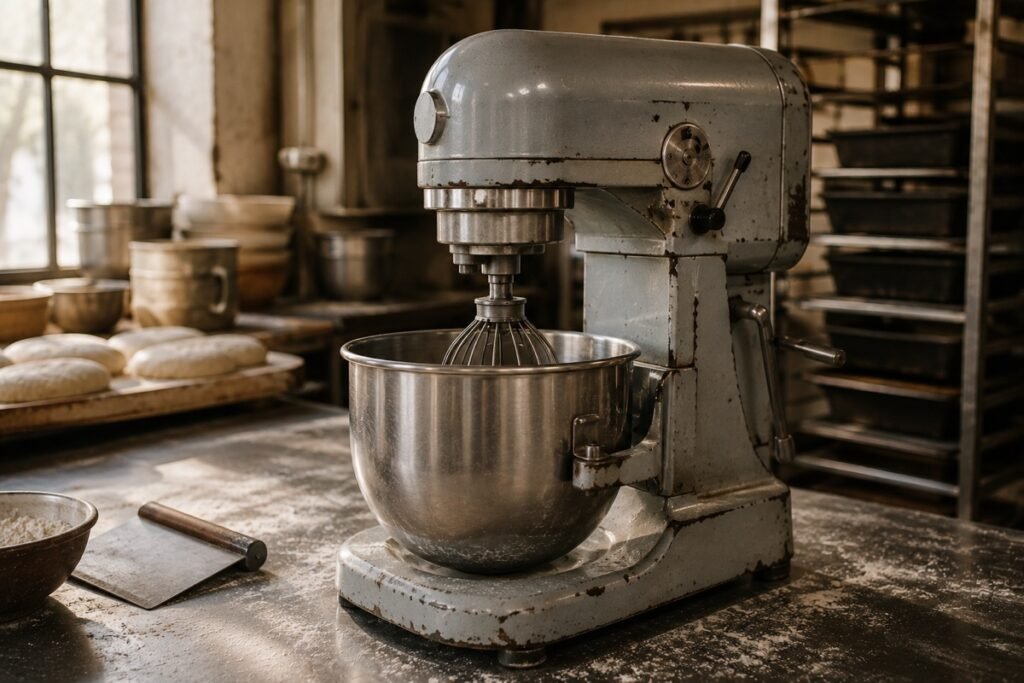
Realistic Service Life by Build Tier
| Tier | Expected life | What decides it | Basis |
|---|---|---|---|
| Budget imported machines | 3 to 5 years in commercial use | Belt drive, thin parts availability, no service network | Our estimate |
| Light commercial (certified countertop) | 10 to 15 years | Duty cycle. Fine in bursts, poor under continuous load | Our estimate |
| True commercial (all-gear) | 20 to 30 years | Rebuildable transmission and available parts | Hobart data |
Only the bottom row rests on published manufacturer data. The other two are our estimates based on build type and parts availability, and we would rather say so than present all three as equally solid.
The gap between the top and bottom rows is not marketing. It is the difference between a sealed belt-driven assembly you replace and an all-gear transmission designed to be opened, serviced, and put back into production.
What Actually Kills Mixers
In roughly the order they matter:
- Chronic overloading. The single biggest cause. Running stiff dough at or above rated capacity, every shift, cooks the motor and wears the transmission far faster than the hours alone would suggest. Our sizing guide covers how to avoid buying into this.
- Heat with no recovery. Motors shed heat between batches, and a machine that never gets that gap runs hotter all shift. Frequency of use wears a mixer as surely as the weight of each batch does.
- Water in the wrong places. Hosing down a mixer drives water into bearings and gearboxes. Alfa International is explicit that high-pressure hoses can contaminate and damage internal components.
- Skipped lubrication. Gearboxes need periodic inspection and lubrication. This is the maintenance most often deferred and the most expensive to ignore.
- Wrong agitator, wrong speed. Changing speed under load and using a whip where a hook belongs both shorten transmission life.
The Maintenance That Actually Extends Life
- Daily: clean with hot soapy water, run bowls through the ware washer, wipe the base with a damp cloth. Never a pressure hose.
- Every six months: check the clearance between bowl and agitator, which drifts as components wear and is a common cause of poor mixing that gets blamed on the recipe.
- Regularly: inspect belts on belt-driven machines and replace before failure, and inspect and lubricate planetary gearboxes.
- Always: keep a maintenance log. It documents the machine’s history and helps a technician diagnose faster, which matters given what service calls cost.
Our maintenance guide goes through the routine in more detail.
When Repair Stops Making Sense
This is where owners hesitate too long, and Hobart has published useful numbers on it. A service call averages roughly $2,500 once you include the trip charge, labour, and parts. Add operational downtime and the lost labour around it and the real cost of a single incident comes to about $4,364.
The compounding problem is repeat failure. Hobart puts the chance of another repair within three years at 22% for older machines, and notes that accumulated repair costs across five years can approach half the price of a new machine.
So the decision is not really repair versus replace on a single incident. It is whether this machine is entering the phase where incidents cluster.
Signs Your Mixer Is Near the End
- Mix times creeping up. Gear or belt wear gradually reduces RPM, so batches take longer and come out less consistent. This is the earliest signal and the easiest to miss because it happens slowly.
- Parts getting hard to source. Hobart flags this specifically for pre-2007 machines. A rebuildable transmission is only an advantage while parts exist.
- Product waste rising. If batches need correcting, that is labour and ingredients on top of the equipment problem.
- Repairs clustering. Two service calls in a year on a machine past 20 is a different situation from one call on a machine at 10.
Service Contracts and Cost Per Year
Once a mixer is central to production, most operators move from fixing things when they break to preventive maintenance, which means scheduled inspection and lubrication before failure rather than a call-out after it. Hobart offers service contracts for exactly this, and the arithmetic behind them is straightforward: an annual planned visit costs less than one unplanned incident at roughly $4,364 all-in.
A contract makes sense when downtime stops production, when the machine is past its warranty, or when you have no in-house technical capability. It makes less sense on a countertop machine you could replace in an afternoon.
Think in cost per year, not purchase price
Purchase price is the least useful number in this decision. Divide by realistic service life instead, and the comparison changes shape. A machine bought once and run for 24 years spreads its cost across more than two decades. A budget machine replaced every four years across the same period is six purchases, six installations, and six rounds of downtime, before counting the batches lost each time one fails mid-service.
Resale closes the gap further. All-gear commercial machines hold value because the used market knows the transmission can be rebuilt, so part of the purchase comes back if you upgrade. Budget machines are effectively worth nothing at the end.
Why This Argues for Buying Better
Run the arithmetic across a working lifetime rather than a purchase price. A budget machine replaced every four years across two decades is five machines, five installations, and five rounds of downtime. A commercial machine bought once and serviced annually is one machine and a maintenance line item.
That is the honest case for spending more up front, and it only holds if the machine is genuinely rebuildable and properly sized. An expensive mixer run overloaded every shift will not reach 24 years either. Our buying guide covers choosing the right tier, and the Hobart vs KitchenAid comparison shows what the build difference looks like in practice.
Frequently Asked Questions
How long does a commercial mixer last?
A true commercial all-gear machine typically lasts 20 to 30 years, and Hobart reports the average Classic mixer still in service is 24 years old. Light commercial countertop machines run 10 to 15 years, and budget imported machines used commercially often last 3 to 5. Duty cycle and maintenance matter more than age alone.
Is it worth repairing an old commercial mixer?
Usually yes for a single failure on an all-gear machine with available parts, since the transmission is designed to be rebuilt. It stops making sense when repairs start clustering. Hobart puts the chance of a repeat repair within three years at 22% for older machines, and five years of accumulated repairs can approach half the cost of replacement.
How often should a commercial mixer be serviced?
Clean daily, check bowl-to-agitator clearance every six months, and inspect belts and gearbox lubrication regularly. High-volume operations should follow the manufacturer’s hour-based schedule rather than a calendar, since a machine running most of the day accumulates wear far faster.
Do commercial mixers hold their value?
All-gear commercial machines do, because the used market knows the transmission can be rebuilt and parts are available. That works in your favour twice: resale value if you upgrade, and a viable used market if you are buying in. Budget imported machines hold almost no resale value.
Bottom Line
Twenty-four years is the benchmark a well-built, correctly sized, properly maintained commercial mixer can reach. Getting there comes down to three things: buy a machine that can be rebuilt, size it so it never runs at its limit, and service it before something breaks rather than after.
Lifespan and repair-cost figures from Hobart’s guidance on mixer replacement. Maintenance practices from Alfa International. Follow your own manufacturer’s schedule where it differs.